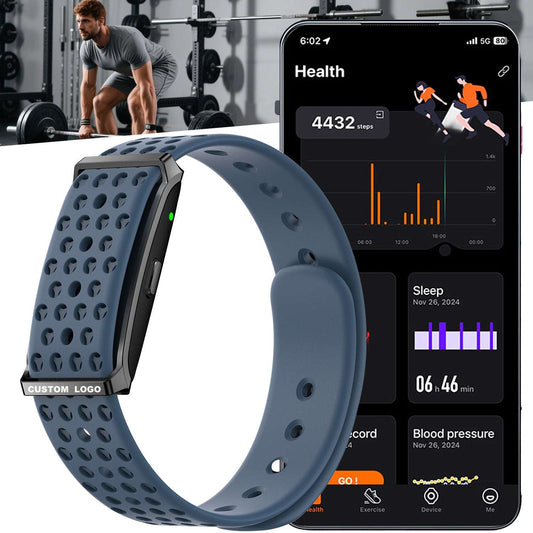

Distributor Catalog Playbook: How to Build a Wearable SKU Ladder Without Smartwatch Complexity

Screenless & Band‑Style Wearables OEM/ODM | Clear Tiering | Easier Training | Better Reorders
Build a “Good / Better / Best / Signature” lineup that distributors can sell in one page.
Distributor catalogs perform best when buyers can understand your lineup instantly. In wearables, the fastest way to lose conversion is to present ten similar bands with minor spec differences. The fastest way to gain conversion is to build a SKU ladder: each model has one clear identity, one clear upgrade reason, and one clear place in your assortment—without forcing you into a full smartwatch category.
This playbook shows how to structure a wearable ladder around band-style and screenless concepts, where the app carries the main dashboards and the wrist experience stays simple. The result is easier merchandising, lower training cost, and a product family built for repeat orders.
BROWSE OUR WORK
Explore our wearable lineup for distributor programs.
Request a Quote | Download Catalog
1) What “No Smartwatch Complexity” Means in a Distributor Catalog
A “smartwatch category” usually brings extra expectations:
- larger display and heavier on‑wrist interaction
- higher UI learning curve
- higher support burden (settings, watch faces, feature confusion)
- shorter battery perception from end users
- more complicated comparison against major smartwatch brands
A band-style ladder avoids that. The wearable stays:
- simple on the wrist (screenless or minimal display)
- clear in the app (dashboards, trends, records)
- easy to teach (few key benefits per tier)
- easy to reorder (stable platform, simple SKU rules)
2) The Ladder Framework Distributors Understand Fast
The most catalog-friendly structure is:
Tier 1 — Core Volume (“Good”)
A safe mainstream model that fits the widest audience.
Tier 2 — Style or Comfort Upgrade (“Better”)
A model that wins on wrist feel or appearance.
Tier 3 — Story Upgrade (“Best”)
A model that adds a strong theme: outdoor identity, sleep focus, or insight/recovery.
Tier 4 — Flagship (“Signature”)
A premium model that justifies higher value positioning (ECG, advanced dashboards, higher waterproof tier).
The goal is not to add features everywhere. The goal is to add clarity: each tier answers “why this SKU exists.”
3) Choose Your Primary Story Per Tier (One Sentence Rule)
Distributors sell faster when each SKU can be described in one sentence:
- Core model: “Screenless, long battery, easy daily wellness.”
- Comfort model: “Slim, lightweight, easier 24/7 wear.”
- Outdoor model: “Nylon or rugged strap identity with advanced wellness.”
- Insight model: “HRV + AI reports for recovery-style routines.”
- ECG flagship: “Screenless ECG + HRV with deeper health dashboards.”
When you build your ladder, write these one-sentence identities first. Specs should support the sentence, not replace it.
4) Recommended Models for a Band‑Style Ladder
Different channels need different anchors. Below is a practical set used in distributor assortments.
ETQ01 — Core Screenless Volume Model
A mainstream, screenless band designed for high-volume programs with a clean wrist look, app-first dashboards, and long battery positioning for low-maintenance daily wear.
ETQ05 — Slim Minimalist Comfort Upgrade
A comfort-first screenless band with a slimmer profile that fits lifestyle retail and daily wear programs where wrist feel and minimal appearance drive conversion.
ETQ08 — Sleep + SpO₂ Story Model
A screenless band anchored on sleep-friendly wear and SpO₂ trend viewing in the app, designed for wellness-led campaigns and monitoring-first catalog pages.
ETQ07 / ETQ07‑M — Outdoor Strap Identity Models
Screenless outdoor models built on the same platform direction, using nylon or rugged strap identity to create shelf differentiation for athleisure, outdoor, and sport-forward channels.
ETQ10 / ETQ10‑P — Premium Insight Tier
Advanced bands built for HRV and AI health report positioning, supporting recovery-style messaging and a clear step-up story above basic trackers.
ETQ15 — Screenless ECG Flagship (IP68)
A premium screenless health band that supports ECG + HRV workflows and expanded dashboards for advanced health positioning, with IP68 protection for daily durability.
5) How to Build a 4‑SKU Assortment That Converts
Many distributors start with 4 SKUs because it is enough to cover major buyer motivations without overwhelming the catalog.
Option A: Lifestyle‑First Ladder (High conversion in general retail)
- ETQ01 as the baseline volume model
- ETQ05 as the comfort upgrade
- ETQ08 as the wellness story upgrade (sleep + SpO₂)
- ETQ10 as the premium insight tier
This set keeps the ladder inside one core category: clean, app-first, easy to explain.
Option B: Outdoor + Premium Ladder (Strong for sport-forward catalogs)
- ETQ01 as baseline volume
- ETQ07 as outdoor identity
- ETQ10 as premium insight
- ETQ15 as the health flagship
This set creates a strong “outdoor + premium” perception without adding smartwatch UI.
Option C: Minimal Catalog (2 SKUs for fast launch)
- ETQ01 as baseline
- ETQ07‑M as the channel-differentiated variant
Two SKUs are often enough for a first shipment: one core model, one identity model.
6) The Distributor Page Layout That Makes Ladders Easy to Sell
A single catalog page works best when it follows a repeatable pattern:
Block 1: Ladder Overview (one line per tier)
Good / Better / Best / Signature.
Block 2: Four model cards
Each card shows:
- one hero photo
- one sentence identity
- three icons (battery / waterproof / key story feature)
Block 3: “Who it’s for” row
Lifestyle / Outdoor / Recovery / Advanced Health.
Block 4: Short FAQ row
Screenless = app-first, charging routine, water resistance, compatibility.
This structure reduces the need to compare long spec tables.
7) Naming and SKU Rules That Reduce Confusion
A ladder fails when SKU naming becomes unclear. A distributor-friendly naming approach:
-
Put the tier name before the model name in the catalog:
“Core ETQ01”, “Comfort ETQ05”, “Sleep ETQ08”, “Outdoor ETQ07”, “Insight ETQ10”, “ECG ETQ15”. -
Keep colorways simple:
- first order: 1–3 colors per SKU
- second order: add seasonal colors
- avoid launching 10 colors across 4 SKUs in the first drop
-
Keep strap variants purposeful:
- nylon strap = outdoor story
- rugged textured strap = sport-forward story
- braided strap = premium/lifestyle story
These rules help distributors train sales teams quickly and prevent mis-selling.
8) Reduce Returns by Controlling Three Expectations
Most returns in band-style wearables come from three misunderstandings:
A) Screenless expectations
A screenless band is app-first. Buyers should see that clearly in the first lines of the listing and on the packaging insert.
B) Battery routine expectations
Battery performance depends on daily usage habits and monitoring routines. Distributor catalogs perform best when they present battery as a routine benefit: “charge less, wear more.”
C) Water resistance expectations
Water resistance is interpreted differently across markets. Catalogs often include:
- the rating icon
- one line of daily-use positioning
- care lines such as “Do not use while charging” and “Avoid hot water/steam”
These three controls improve review quality and reduce after-sales conflict.
9) Make the App Experience Part of the Ladder Story
Band-style programs succeed when the app is part of the product story:
- core models focus on daily dashboards and records
- outdoor models focus on durability and long-wear behavior
- insight models focus on reports and trend interpretation
- ECG models focus on workflows and record history
This makes your ladder feel cohesive: the wrist stays minimal, the app provides depth.
10) Repeat Orders: How to Keep the Ladder Stable Across Batches
Distributor programs depend on reorder confidence. Stability comes from:
- consistent model naming and tier placement
- consistent packaging level per tier
- consistent strap identity per tier
- consistent documentation set (manual, insert card, labels)
A stable ladder also helps your channel partners build long-term listings and maintain reviews without replacing product pages every season.
Certifications and Documentation (B2B Note)
Certification documentation can be provided based on the model and target market. Final labeling and compliance requirements vary by destination country and channel policy.
FAQs
10 FAQs for Distributor SKU Ladder Planning
-
Why do distributors prefer ladders over large model lists?
Ladders make assortment decisions faster and improve upsell because each SKU has a clear role. -
How many SKUs should we launch first?
Four SKUs are common for a full ladder. Two SKUs are common for a fast launch. -
What is the best “core” model role?
A stable screenless model that fits the widest audience and supports repeat orders. -
What makes an upgrade tier credible in catalogs?
A clear identity upgrade: comfort, strap identity, sleep focus, insight reports, or ECG dashboards. -
Do we need a smartwatch to sell premium tiers?
No. Premium positioning can be built with app dashboards, HRV/AI reports, or ECG workflows in band-style products. -
How do we keep training simple for multi-SKU catalogs?
Use one-sentence identities per tier and keep each tier’s story consistent across the catalog. -
What is the easiest way to differentiate two SKUs on one platform?
Strap identity (nylon vs rugged vs braided) and packaging level create visible differentiation. -
What should the packaging include for distributor programs?
A clear tier identity, an app-first statement for screenless products, and a simple quick start insert. -
How do we reduce support tickets after launch?
Clear onboarding, consistent copy, and a stable documentation set reduce confusion. -
Is health data medical-grade?
No. Health data is for wellness reference only and not intended for medical diagnosis.