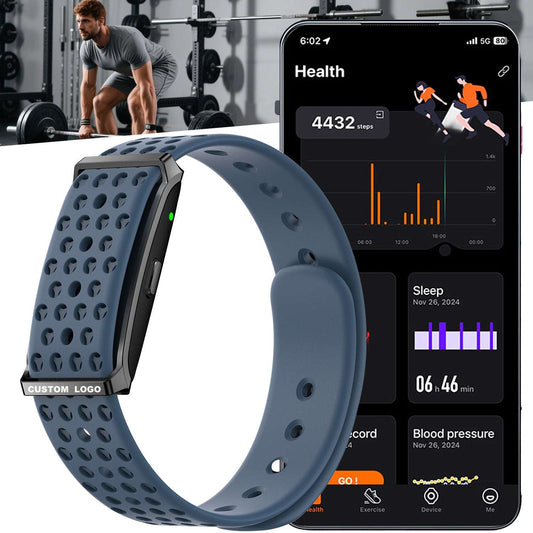

Battery Life Messaging for Wholesale: How to Describe Typical Use Without Disputes

B2B Wearables OEM/ODM | Clear Endurance Claims | Better Reviews | Fewer Returns
Sell the routine, not a risky number.
Battery life is one of the first specs buyers notice in distributor catalogs and e‑commerce listings—and one of the fastest ways to trigger disputes after shipment. In wholesale programs, the goal is not to write the biggest number. The goal is to write a defensible, repeatable, channel-consistent battery message that matches the product’s real-world usage pattern and protects your brand across markets.
This guide explains how B2B buyers should describe typical use, how to keep battery claims consistent across product pages and packaging, and how to avoid the most common “battery doesn’t match” complaints in private label wearables.
BROWSE OUR WORK
Explore our wearable lineup for wholesale and private label programs.
Request a Quote | Download Catalog
1) Why Battery Claims Cause So Many Disputes in B2B Programs
Battery disputes are rarely caused by one bad unit. They are usually caused by expectation gaps created by marketing copy, icons, or oversimplified comparisons.
Common dispute patterns include:
- Customers interpret “X days battery” as a guaranteed minimum for every user.
- A channel posts the maximum number without explaining the usage pattern behind it.
- Different resellers describe the same SKU differently, creating confusion and warranty pressure.
- Battery performance is compared across categories (screenless vs display vs smartwatch) without context.
For distributors, battery copy is not only a selling point; it is a support policy. Good battery messaging reduces negative reviews, return rates, and escalation with channel partners.
2) What “Typical Use” Means (The Definition Buyers Actually Need)
In wholesale messaging, “typical use” should communicate a normal daily routine, not a best-case laboratory condition and not a worst-case stress test. A typical-use description is strongest when it matches how users behave:
- wear the band daily
- sync to the app regularly
- receive some notifications
- use reminders
- use sport tracking occasionally
A typical-use claim works best when it is written as:
- a range, not a single perfect number
- a routine-based statement, not a “forever” promise
- consistent across product page, packaging, and manual
3) The Two Battery Numbers You Should Separate Clearly
Wholesale listings often mix these two concepts. Separating them prevents confusion:
Usage time (typical use)
The device is being worn, sensors are running, and the user is interacting with the app.
Standby time
The device is powered on but used less actively. Standby is useful for technical comparison, but it is not the number most end users experience.
A clean catalog layout often uses:
- Usage time as the main headline
- Standby time as a secondary specification line
4) What Changes Battery Life in Real Use (The Factors That Drive Complaints)
Battery performance is strongly affected by daily behavior and feature settings. These are the most common drivers:
A) Monitoring frequency
Continuous monitoring and frequent background sampling use more power than lighter monitoring routines.
B) Notifications and vibration
High-volume message notifications and vibration frequency increase consumption.
C) App sync frequency
Frequent syncing and long sync sessions increase energy use.
D) Sport mode usage
Long workouts and frequent sport sessions consume more than general daily tracking.
E) Phone connection stability
Unstable Bluetooth environments can increase reconnection attempts and reduce endurance.
F) Waterproof and charging behavior
Charging habits, cable quality, and charging routine consistency influence perceived battery performance.
You do not need to explain every factor to end users, but your internal B2B messaging should assume these variables exist and avoid absolute promises.
5) Battery Messaging by Product Category (What Works Best in Catalogs)
Different product types should use different battery messaging styles.
Screenless fitness bands (app-first wearables)
Best messaging angle: “charge less, wear more”
Screenless models are typically chosen for low distraction and long wearing routines. Battery messaging should emphasize routine and convenience.
Mini display bands (LED/TFT small screens)
Best messaging angle: “quick checks + still low maintenance”
The value is visibility with a compact form. Battery copy should position endurance as a strong daily-wear routine rather than a maximum claim.
Advanced health bands (ECG / HRV / multi-parameter dashboards)
Best messaging angle: “health-first dashboards with practical charging routine”
These models often run heavier monitoring routines. Battery copy should set expectations clearly and focus on a consistent routine for users who measure regularly.
6) The Battery Copy Framework That Reduces Disputes
A low-dispute battery description usually includes four parts:
Part 1 — One-line headline (routine-based)
Example structure:
- “Long battery life designed for low-maintenance daily wear.”
Part 2 — Typical-use range (not a single number)
Example structure:
- “Usage time: up to X days (typical use).”
Part 3 — Standby specification (optional)
Example structure:
- “Standby time: up to Y days.”
Part 4 — One short condition line (simple and neutral)
Example structure:
- “Battery life varies with monitoring settings, notifications, and usage habits.”
This creates a strong listing while giving you a clear support position if a dispute happens.
7) Where to Place Battery Messaging (So It Stays Consistent)
Battery disputes often start because battery claims appear in multiple places with different wording. The cleanest approach is to standardize battery copy across:
- product page headline bullets
- product specification section
- packaging icon row or key feature panel
- quick start card (charging routine line)
- manual FAQ section
- distributor product sheet
When all channels reuse the same core battery lines, customer expectations stabilize and return rates drop.
8) “Copy Blocks” You Can Reuse in Wholesale Listings
Below are ready-to-use battery messaging blocks for B2B partners.
A) Short battery headline (one line)
- “Long battery performance for low-maintenance daily wear.”
B) Typical use + standby (two lines)
- “Usage time: up to [X] days (typical use).”
- “Standby time: up to [Y] days.”
C) Condition line (one line)
- “Battery life varies with monitoring settings, notification frequency, and usage habits.”
D) Charging line (one line)
- “Magnetic charging supports a simple daily charging routine.”
E) Distributor FAQ answer (two lines)
- “Battery performance depends on how often users sync, use sport modes, and receive notifications.”
- “For best consistency, use the same battery wording across listing and packaging.”
You can insert your model’s specified numbers into the [X]/[Y] fields and keep the rest unchanged.
9) Battery Icons and Packaging: Keep the Message Simple
Icons are powerful—and risky. Many disputes start from an icon like “30 DAYS” without context. If you use icons, pair them with a short supporting line:
- Icon: “Up to X days”
- Line below: “Typical use. Actual performance varies by usage habits.”
This keeps the packaging strong for retail and protects your after-sales handling.
10) Handling Distributor Questions: The Three Answers That Prevent Escalation
When partners ask “Can we claim 30 days battery?” the clean answer format is:
- Use the model’s specified usage range (not a larger number from a different model).
- Use the word “up to” and keep “typical use” visible.
- Use one condition line consistently everywhere.
This makes the claim stable across channels and protects repeat orders.
11) Battery Messaging for Multi‑SKU Catalogs (Good / Better / Best)
If you sell multiple tiers, battery messaging should help the ladder instead of confusing it:
- Core volume SKU: highlight long routine and simplicity
- Outdoor SKU: highlight durability + long routine
- Insight SKU: highlight interpretation and daily routine, not just battery
- ECG flagship: highlight dashboards and practical charging routine
Battery is a strong feature, but it should not become the only feature. A balanced ladder sells better and reduces “why does this one last less” disputes.
Certifications and Documentation (B2B Note)
Battery specifications and documentation vary by model. Final labeling and channel requirements vary by destination country and channel policy.
FAQs
10 FAQs for Wholesale Battery Life Messaging
-
What is the safest way to describe battery life in listings?
Use a typical-use range, include “up to,” and add one neutral condition line about usage habits. -
Should we publish standby time?
Yes, as a secondary specification line. Usage time is usually the better headline for end users. -
Why do customers say “battery doesn’t match the promise”?
Most complaints come from expectation gaps: different usage habits, frequent notifications, frequent syncing, or heavy sport usage compared with the assumed routine. -
Is it better to use one number or a range?
A range is safer and more accurate for real-world wearables. -
Should we use the same battery wording on packaging and product pages?
Yes. Consistency across all materials reduces disputes and negative reviews. -
Do screenless bands usually last longer than display bands?
Screenless designs often support longer routines because there is no display power draw, but final endurance still depends on settings and usage habits. -
How do corporate programs describe battery life best?
Corporate programs typically use routine-based wording: low maintenance, fewer charging interruptions, and consistent daily wear behavior. -
Does frequent app syncing reduce battery life?
Yes. Frequent syncing and long sync sessions can reduce endurance compared with lighter sync routines. -
What should we do if different resellers publish different battery numbers?
Standardize one approved battery copy block and require partners to use it across listings and packaging. -
Can battery life be guaranteed for every user?
No. Battery performance varies with monitoring settings, notifications, syncing frequency, and usage habits.